6 AI mental health apps for battling burnout and more
B2C | Tech | Trends | SEO | Long form

Why use AI for mental health care? These six applications and products demonstrate how AI can personalize your experience and make mental health care more accessible.
The pandemic has forced many of us to rethink our approach to work-life and home-life, where lines are now more blurred. Parents are taking on childcare in addition to their work responsibilities, singles feel lonelier, we’ve stopped making friends at work, and now people are “quiet quitting” to find some relief.
In response to increasing burnout, hustle culture is on the decline (thanks, Gen Z). This cultural shift is pushing us to make mental health a priority as we all look for new ways to take care of ourselves. Enter: mental health apps. Funding to mental health tech startups grew 139% this year, according to CB Insights. And as more and more companies consider or adopt tech powered by artificial intelligence, we’re seeing apps that combine mental health and AI to fill gaps in assessing and treating issues that might otherwise go unnoticed.
There are many reasons you might prefer a digital, AI mental health solution over traditional forms of therapy. One of the main benefits of artificial intelligence is the ability to use the technology to process huge amounts of information. This helps to provide the end user with a personalized experience as the tech can compare your data against tons (from thousands to even billions) of data points, whether they be from scientific papers, studies, or non-identifiable and private personal data. The quantified self (the concept of using tech to track yourself against others) is hardly a new concept. More than ever, people want to track both the physical and emotional sides of their wellness and AI can help with both. The pandemic also contributed to the surge resulting from limited time, cost of care, or lack of access to mental healthcare.
Here’s a look at six 6 AI mental health apps to personalize your experience and make getting care more accessible.
Breathhh
TLDR
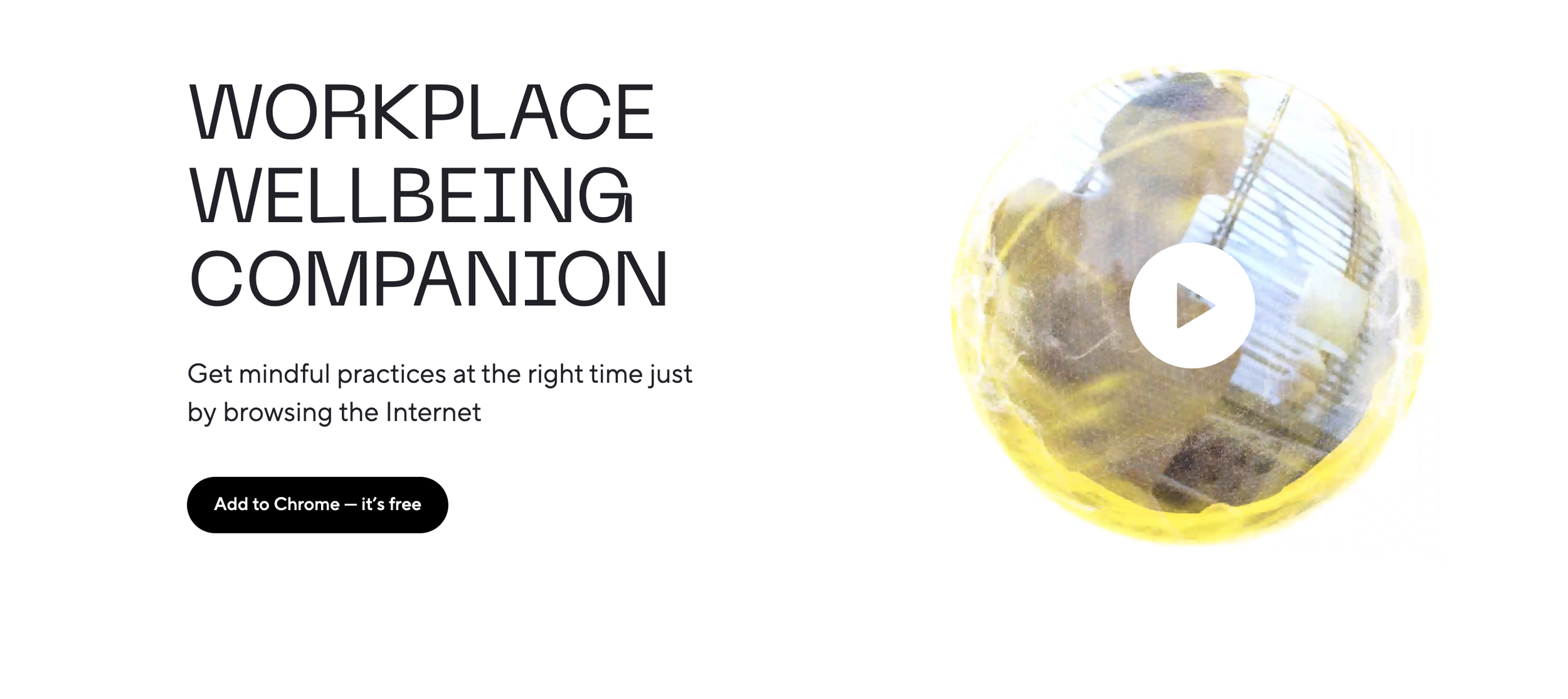
Breathhh is an AI-powered Chrome extension that automatically delivers mental health exercises when you need them based on your web activity and behaviors online.
The Details
Breathhh touts a seamless experience of practicing mental health care by naturally integrating it into your day, without annoying notifications or making you develop habits like checking an app. The app developers use AI to provide individual, evidence-based practices to give users what they need when they need it.
Free users get mental health exercise prompts (which include physical prompts as well) such as deep breathing, emoji-based mood journaling, and access to pre-recorded fitness routines for your eyes, shoulders, back, and neck. If you want an enhanced AI experience, Breathhh Ultima users unlock the functions of Breathhh’s neural engine, tools to focus and manage site usage by category, and detailed notes for mood journaling. AI is only as good as the data going into it, so as you go about your day, week, month, and year, the service learns and improves with the hope that you will, too.
From the Community
I was curious about the tool and have been using the extension for two weeks and unfortunately, I haven’t noticed the notifications. The alerts are so subtle (by design to prevent users from getting annoyed by the tool) that I miss them and don’t get the product's benefit.
Others seem to love Breathhh’s subtlety and minimalism, which are key features of the tool. So while it didn’t work for me, one user speaks to the simplicity of the extension, “I just started using the product, this is what I was looking for! Finally, we have a service that does not contain anything extra.” Others share how it’s helping them manage the always-on nature of remote work.
wysa
TLDR
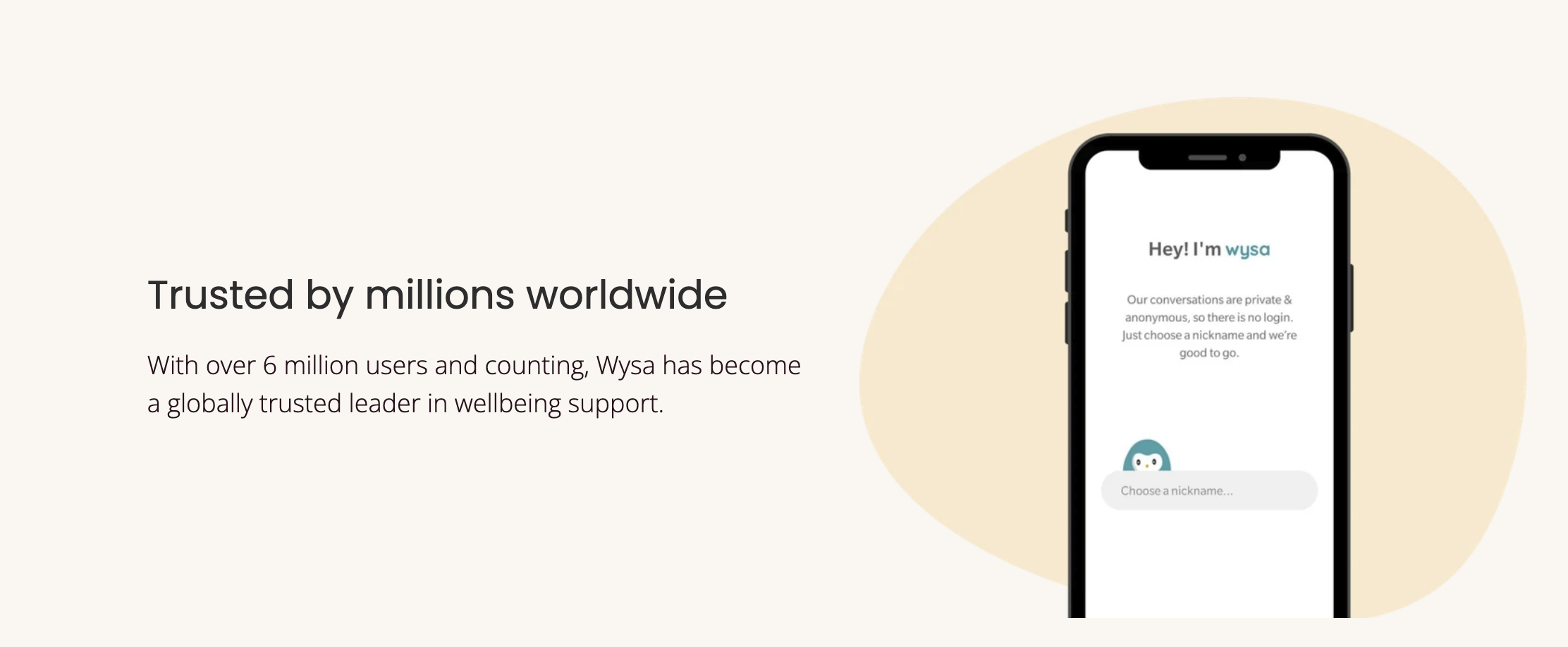
Wysa is an anonymous AI chatbot that listens to you and recommends evidence-based CBT (Cognitive Behavioral Therapy) and DBT (Dialectical Behavior Therapy) exercises, or connects you to a therapist to help you manage your mental health.
The Details
Wysa is an AI chatbot for your mental health that offers a private and secure way to talk about things that you might be afraid to share with another person. The app recommends modules and exercises to improve your well-being and empower users to take control of their mental health on their terms. The company has partnered with researchers and mental health professionals from all over the world to validate the content it serves up to users to ensure a safe and effective experience that is evidence-based and secure.
A leader in the AI mental health space, Wysa launched its anonymous AI chatbot seven years ago and they’ve been very busy since. What started as a self-care tool for individuals has now gone B2B selling its service as an employee wellness perk for SMBs. They also plan to co-brand the software for clinicians to use with patients and for insurance companies to offer to their members. More than 3 million users have used the app and there are more than 150 self-care tools to deal with a wide range of issues. For more sensitive issues, Wysa can connect you with a mental health professional to talk with someone one-on-one.
From the Community
One user shared their experience using the app when she was coping with the loss of a parent: “Wysa surprised me with how well it listened and talked me through the loss of my parent. I started using it out of curiosity and found myself in an hour-long chat exploring my feelings and getting really helpful techniques to deal with grief. I'm impressed with this app, because while chatting - I forgot it was an app!”
ladder
TLDR
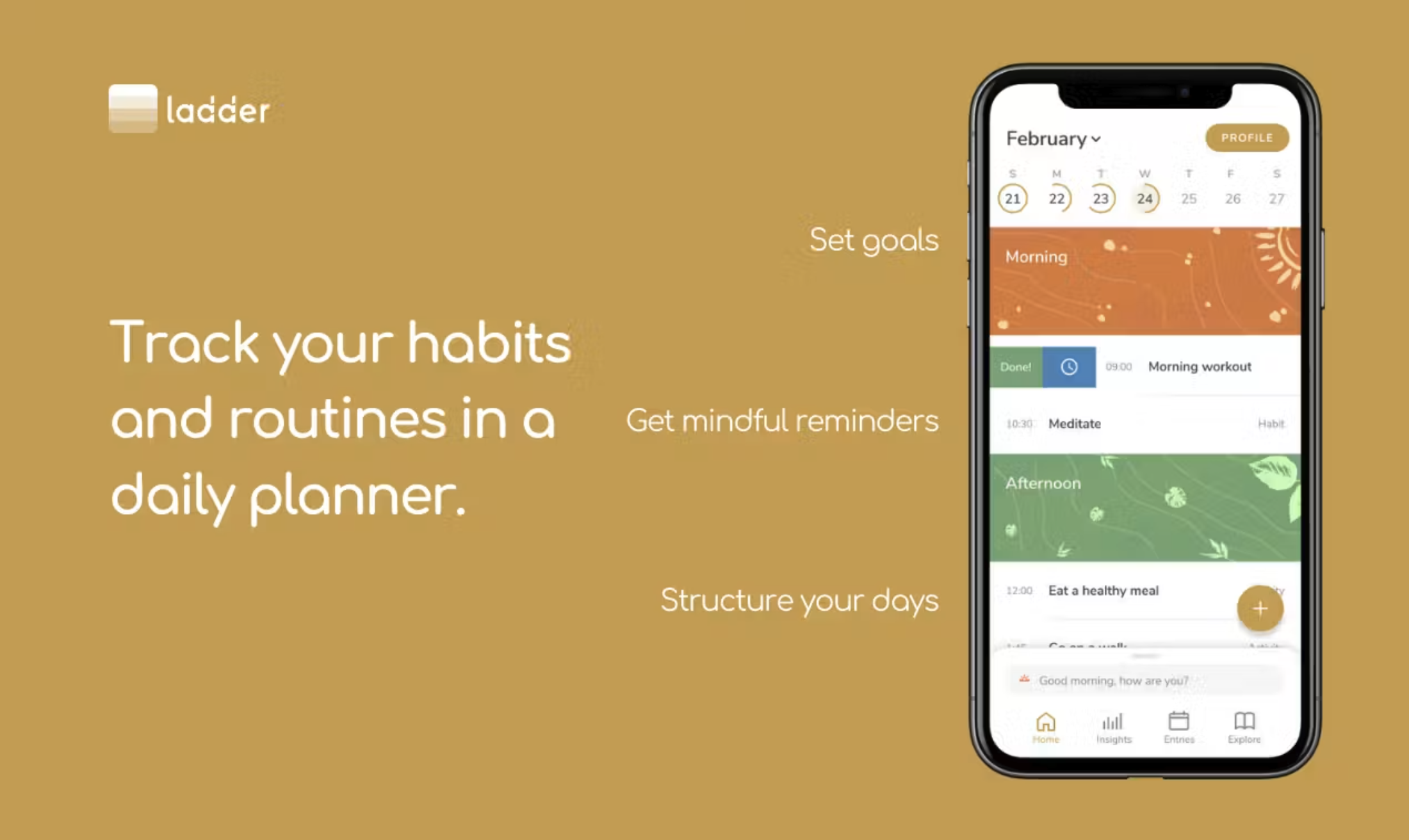
BIPOC-designed Ladder is an AI mental health app that tracks your moods and helps you build healthy habits.
The Details
Ladder brings an important perspective to AI for mental health–diversity and inclusion. Designed by and for Black, Indigenous, and people of color, Ladder understands that these groups can experience mental health differently and its app has a variety of tools to achieve your mental health goals. It has soothing sounds and binaural beats to help you sleep better, personalized meditations, mood-tracking tools, and an option to write short daily reflections. Like most mental health apps,
Ladder creates a visual analysis of your mental health over time to help you understand patterns and enjoy a more personalized, authentic experience.
From the Community
“I’ve been using the beta for the past few months and highly recommend. Can’t wait to see how this progresses. Love what they stand for and love that they recently launched with trading donations to non-profit organizations for memberships ✊🏽”
kintsugi
Kintsugi is an award-winning journaling app and now enterprise software solution powered by an AI voice recognition technology that can detect mental health challenges in any language.
The Details
Kintsugi combines the age-old tradition of talking (literally) about your feelings with AI algorithms that listen for novel voice biomarkers to detect mental health challenges like depression and anxiety. All you have to do is talk to the journaling app (about anything, in any language) and the Kintsugi Voice AI reveals insights about your mental health and recommends ways to improve your wellness.
This same AI technology powers Kintsugi’s new B2B enterprise solution, which is an API-first platform for providers, health systems, and digital health companies. The technology is designed to augment practitioners and care management systems and integrates with call centers, telehealth systems, and remote patient monitoring apps.
From the Community
This product is new — add to the conversation and share your thoughts about Kintsugi.
Humans have used apps to collect data about their health for more than a decade. Sleep, fitness, and mental health can all be plotted and graphed to help us understand ourselves and live happier, healthier lives.
The pandemic tipped the scales to focus on mental health as we struggled to adapt to new challenges at home and work. While some of the products discussed here are old and some new, the pandemic simply supercharged a trend that was already rising. When it comes to the quantified self, we want it all: the data, the tools to manage it, and the now AI insights to accelerate our learning to reach our personal goals faster.